Methodology
Ideas are cheap. Building is the interesting part.
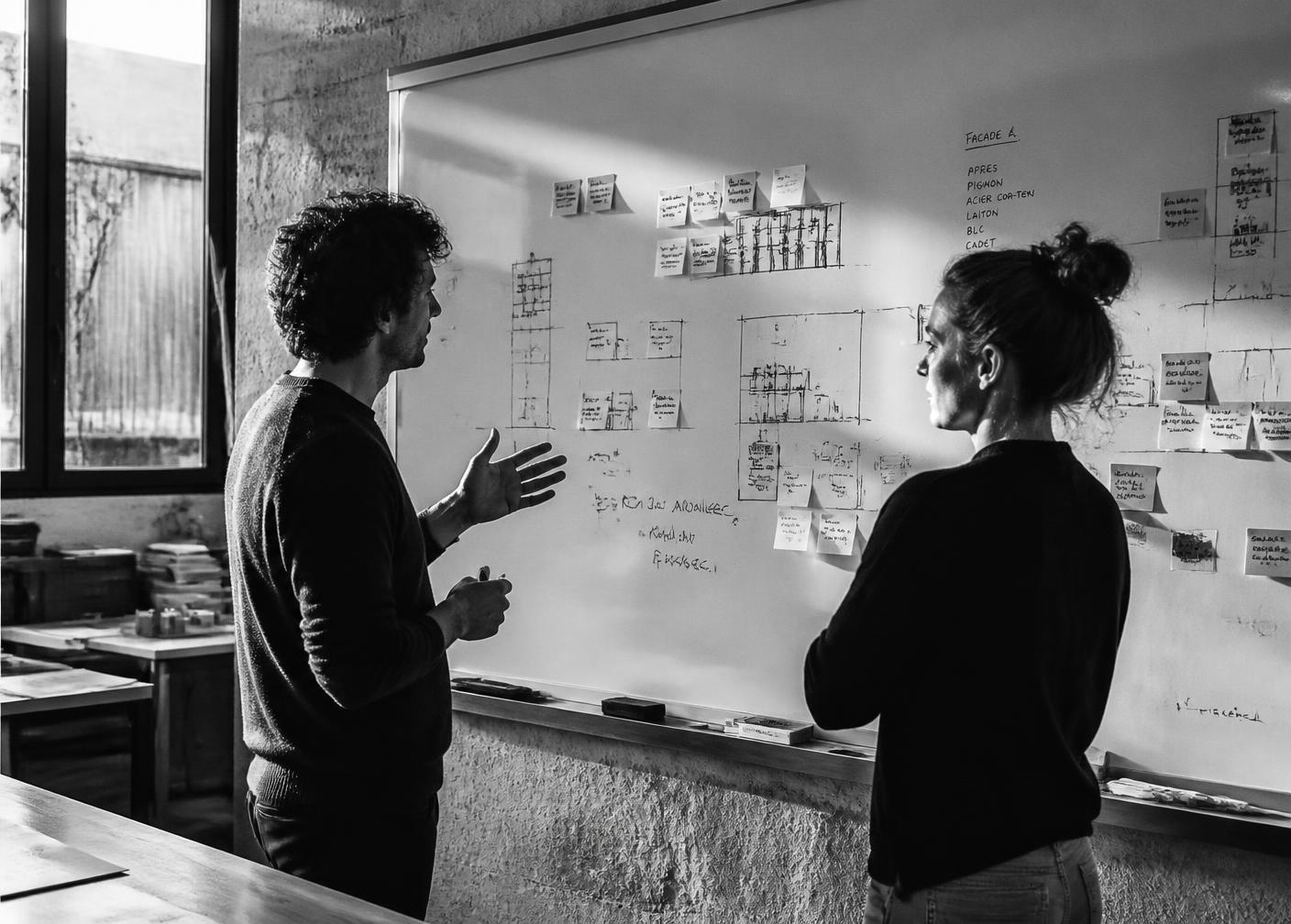
Lab of Awesome does not exist to brainstorm endlessly. We run a repeatable process for turning real problems into functioning companies — for growing the ones that work, and for killing the ones that don't earn their place.
- 01
Problem
Is this worth anyone's decade?
We start from friction we can observe, not from a technology looking for a use. We talk to the people living inside the problem before we write a line of code.
- 02
Concept
What would the unconventional answer look like?
The obvious solution usually already exists and usually already failed. We design the version that only becomes possible because something changed: behaviour, regulation, cost or capability.
- 03
Prototype
Do people actually want this?
We build something rough and real, put it in front of users and let evidence replace opinion. Prototypes should be slightly embarrassing — otherwise they took too long.
- 04
Venture
Does this deserve to become a company?
When the signal is there, we form a team, a name and a business around it. The venture gets its own identity, its own roadmap and its own leadership.
- 05
Scale
What does it need to stand on its own?
Hiring, go-to-market, partners and capital. The goal is an independent company, not a permanent internal project.
The full lifecycle
How we build companies.
The five phases above describe how something becomes a venture. This is the complete arc — and we can stay actively involved at every stage of it.
- 01
Discover
Find meaningful problems and market opportunities.
- 02
Validate
Test the assumptions that matter before investing heavily.
- 03
Build
Create the technology, product and proposition.
- 04
Launch
Put the venture into the real world and acquire the first users or customers.
- 05
Grow
Develop the commercial engine around what works.
- 06
Scale
Build the organisation, team, systems and capital structure required for growth.
Beyond launch
Building is only half the job.
A product is not a company. After launch the harder work starts: finding customers, building distribution, improving the product, creating a team and developing a repeatable growth engine. We do not disappear when the MVP is delivered. We help build the company around it.
Capability · Grow
The commercial machine around what works.
Once a venture shows signs of product-market fit, the question changes from "does this work?" to "how does this compound?". These are the capabilities a company needs to answer that — assembled inside the venture team, not sold as a service.
Position it
- Positioning
- Branding
- Pricing
- Revenue models
Find customers
- Go-to-market
- Customer acquisition
- Performance marketing
- Organic growth
- Content
Sell and distribute
- Sales
- Outbound
- Partnerships
- Channel development
Compound it
- Conversion
- Retention
- Lifecycle marketing
- Community
- Analytics
- Commercial operations
- Internationalisation
Capability · Operate
The company behind the product.
Ventures rarely fail because the software was wrong. They fail because nobody built the organisation around it: the rhythm, the hires, the numbers, the capital.
Direction
- Strategy
- Company building
- Objectives and KPIs
- Governance
People
- Hiring
- Team design
- Founder support
- Operating rhythm
Execution
- Product management
- Technology leadership
- Commercial operations
Capital
- Finance
- Fundraising preparation
- Partnerships
- Reporting
The growth engine
A venture needs more than a product.
Around every venture
- 01Product
- 02Technology
- 03Brand
- 04Distribution
- 05Sales
- 06Marketing
- 07Capital
- 08Team
- 09Operations
Together they create
Growth.
A product is one of nine. Missing three or four of the others is the usual reason a good product never becomes a company.
Venture teams
Small teams, assembled around the venture.
Every venture gets a small multidisciplinary team. Early on it leans towards product and validation. Later, growth, sales, operations and leadership become the centre of gravity. The composition follows the stage.
- Venture LeadOwns the outcome of the venture end to end.
- ProductDecides what gets built next, based on evidence.
- EngineeringTechnology, AI and the product itself.
- DesignInterface, brand and product logic.
- GrowthAcquisition, distribution and the commercial engine.
- CommercialSales, partnerships, pricing and revenue.
- Domain ExpertThe inside knowledge of the industry being rebuilt.
Origins
Ventures can start anywhere.
Sometimes the idea starts inside the Lab. Sometimes it starts with an entrepreneur. Sometimes it starts with an organisation that understands an industry deeply enough to see what should exist next. What matters isn't where the idea came from. What matters is whether the problem is real, the opportunity is meaningful and we can build something exceptional around it.
We start it.
We identify a problem or opportunity ourselves and build the venture from the ground up.
We build it together.
An organisation, entrepreneur or domain expert brings the problem, market access or industry expertise. We bring venture thinking, technology, product development and commercialisation. Together we create something new.
We build it for you.
In selected cases, organisations engage us to develop and validate a new product, platform or digital business. The same venture-building mentality applies: we challenge assumptions, validate before overbuilding and behave like founders rather than external contractors.
Scale or kill
Not every experiment becomes a company. That's the point.
A studio that never stops anything is just a portfolio of obligations. Stopping early is what makes it possible to start often — and it is the reason the ventures that survive get real attention, real teams and real capital.
Have a problem that fits step one?
Bring the problem. We'll explore the company.